
Become an Essential Care Partner
What is an Essential Care Partner (ECP)?
An Essential Care Partner (ECP) is someone chosen by the patient to be involved in their care and support.
- They could be a family member, friend, neighbour, or any trusted person.
- The role is unpaid.
- ECPs not just visiting; you’re part of the care team.
- The role may include, but is not limited to, emotional support, helping with routines, attending appointments, or assisting with communication.
The program recognizes the caregiver’s existing role without adding new responsibilities and enables the caregiver to continue sharing important knowledge about the patient’s needs, abilities, routines and preferences.
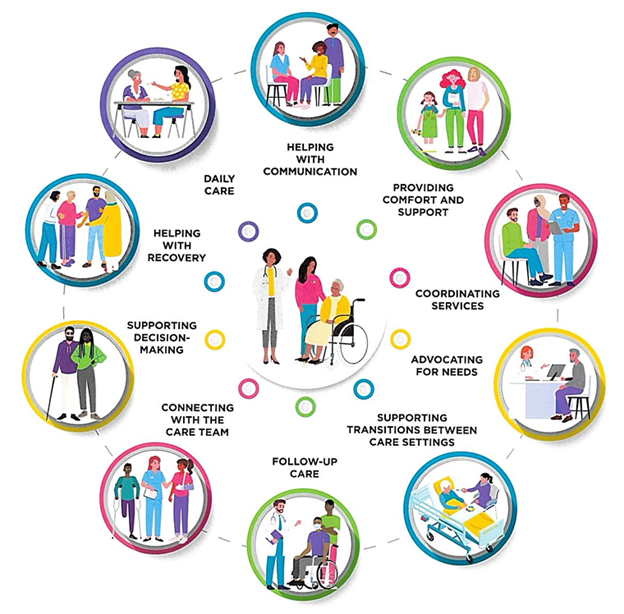
Who can be an Essential Care Partner and how they’re chosen
Patients have the right to choose their ECP.
- Their choice is based on trust and support, not necessarily legal or family status.
- In hospital or clinic settings, consent is needed for someone to be named and involved.
- If a patient cannot speak for themselves, their Substitute Decision Maker (SDM) may identify an ECP, and the SDM may also serve as the ECP when appropriate.
- Being an ECP does not provide legal authority, it’s about meaningful support and presence.
Why Essential Care Partners matter
ECPs bring comfort, familiarity, and trust to someone’s care experience. Involving ECPs improves communication, reduces stress, and strengthens relationships with care teams.
Studies show that care outcomes are better when patients feel supported by someone they trust.
Support while at Brockville General
ECPs are supported by hospital staff and volunteers throughout their time at Brockville General. Volunteers can assist with finding your way around the hospital and helping patients and families access information and resources while in the hospital.
How to become an Essential Care Partner
Speak with the patient and a member of the care team about becoming an ECP. Permission will need to be given by the patient or their SDM. The ECP and the patient will be asked to identify ways the ECP can support the patient during their time in hospital, during transitions, and at discharge.
After being identified as an ECP, information and guidance are available to help ECPs navigate the hospital environment and understand available supports and services.